

For Starters: A Word to the Wise
Several firms and individuals present themselves as veterinary practice brokers, with emphasis on the word present. When large vet medicine companies and corporate buyers have layoffs, oftentimes their former business development folks suddenly pivot to brokering practices. This is also true for some CPAs, financial advisors, and bankers who’ve helped owners before and think, “Hey, I can make a quick buck this way!” But practice owners must recognize that a great broker really needs to know two big things, inside and out: what the vet world is actually like (have they been in your shoes?) and all the specifics of veterinary practice sales.
Selling your practice is likely the single biggest financial transaction of your lifetime. So, you’d want to work with someone who’s not just been in your shoes but also has a solid track record of closing lots (by lots, we don’t mean five, we mean hundreds) of sales and deeply understands the lay of the land with corporate buyers. Think about it: you wouldn’t settle for just anyone to sell your house, do your hip surgery, or manage your money. So why not be just as picky when choosing someone to help sell your practice?
We’ve put together a detailed set of questions you should ask any broker you’re thinking about teaming up with to sell your practice. Keep reading to see what you should ask, from broad questions to specific ones, to find your perfect broker.
General Questions To Ask A Veterinary Practice Broker
- How many sales of practices have they, or their firm, managed to close successfully in the past 6 months? The past 12 months? The past 24 months?
- Who handles the normalized profit and loss analysis? Do they take care of it to ensure the highest possible EBITDA (profit), or do they leave it up to the corporate buyer? (Keep in mind, the corporate buyer’s interests don’t align with yours in this matter!)
- When it comes to the normalized analysis of my P&L, who’s responsible? Is it the broker themselves, or do they have a dedicated team of seasoned analysts for this? Can they describe what their team or support structure looks like? (Is it just a one-man band or a team of experts?)
On All Things Commission
- Do I need to pay anything upfront?
- Do I need to pay for a practice valuation?
- Do you receive any kickbacks from buyer groups? (This is a BIG one, and often not disclosed on purpose. If a broker benefits from a buyer group, it means your practice isn’t being marketed to all potential buyers. This can reduce competition, ‘bidding’ activity and, as a result, the final offer for your practice.)
- How does your commission work? For example, if my practice sells for a $5 million valuation, but you only receive $3 million in cash at close (the remainder is deferred) do you take your commission from the entire $5 million at the deal’s close?
A note on this question in particular: It’s essential to realize you won’t get the full $5 million upfront. You might get 60%, or $3 million, in cash, with the rest paid out over the next few years through what’s called a ‘structure’ which utilizes strategies like TopCo stock options, joint venture ownership, seller notes, earnouts, etc.
Then let’s say you ask: Do you take your full commission at closing based on the $5 million, or is it structured so that you’re paid as I am? What if the value of any TopCo equity drops in a few years, and I don’t end up receiving the full $5 million? In such cases, the broker has been fully paid, but you haven’t received all your money. A commission model that pays out as the seller (you) receives their money can better align the broker’s interests with the seller’s.
- After the sale, what role do you play? If your service ends with the sale, who assists me in checking the corporate profit and loss statements for accuracy, especially when earnouts are calculated a few years down the line? Who’s there to advise me if the corporate group falls short on their promises? In this case, you want a broker who will stick with you as a trusted advisor until you receive the last payment, ensuring you’re supported throughout the entire process.
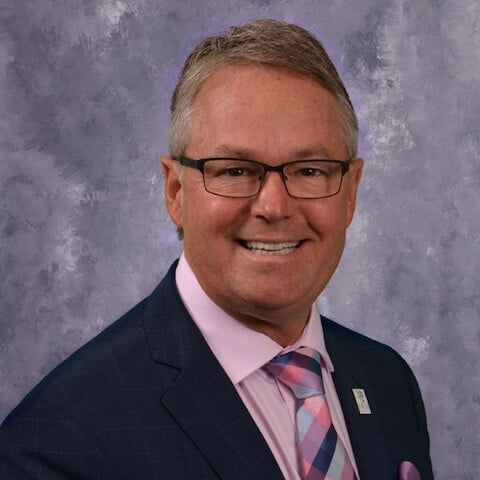
What Makes Dr. Roger Redman an expert on this topic?
- Firsthand practice owner
- Previous corporate buyer work experience
- Dozens of practice transactions
On the Marketing of the Practice to Corporate Buyer Groups
- How do you plan to market my practice? What does that include? (At minimum, there should be a comprehensive marketing packet featuring photos of the facility, a local demographic analysis, financials that have been adjusted for normal operations, and a clear outline of potential growth opportunities.)
- Which corporate groups do you intend to contact? Will you focus on a select few within our state or region, or will you reach out to all potential buyers? (It’s important to remember that buyer groups may target new states for expansion without making a formal announcement. You want your practice in front of them if that happens. Your practice should be marketed to ALL buyer groups. Think of the sale like an auction, where the more bidders = the higher the final selling price.)
- I own the real estate. Will you be negotiating the lease with the corporate buyer? If so, do you have a commercial real estate license to do this? (Every state requires a licensed real estate broker for lease negotiations, and not all practice brokers are licensed in real estate!)
On the Legal and Financial Due Diligence of the Practice Sale
After signing a Letter of Intent (LOI) for exclusive negotiations with a buyer, what kind of support can I expect from you during the due diligence period of 3-4 months? Will you be involved in weekly update calls with the buyer?
Will you gather essential documents such as bank records, insurance policies, legal papers, tax documents, licenses, registrations, and practice management reports, or will I need to provide these to the buyer myself?
Given my busy schedule as a DVM, do you have team members who can remotely access my systems to collect all necessary data and financials for the buyer?
Regarding legal representation, will I need to find my own attorney, or can you help in finding one? Alternatively, do you refer me to an attorney you regularly work with? (It’s vital that the law firm specializes in veterinary mergers and acquisitions, and you should have the freedom to choose from several recommended firms rather than being appointed a specific one.)
Get an accurate estimate of your practice’s value.
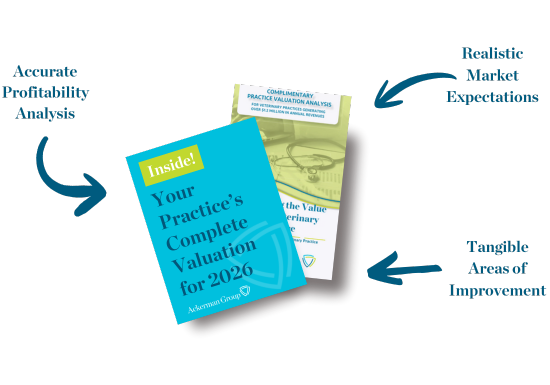
Always Complementary.
Always Confidential.
Questions for a Broker Regarding Support Post-Sale
Hypothetically, I’m a year in after selling, and the corporate group claims I haven’t hit my targets to receive my earnout payment. Is my brokerage still representing me at this point, and will their analysts check the financials to ensure everything’s accurate?
This question matters too if you’re exiting a Joint Venture after a few years. What you get paid when you exit is all based on the EBITDA of your practice. So, who’s calculating that EBITDA? Did the corporate group sneak their management fees in as expenses, which would make the EBITDA look smaller? And who’s going to help you figure this out 3-4 years after you’ve sold? If a broker pockets their whole commission right when you sell, they have little incentive to help you out later on if situations like this arise.
Choose a Broker Who Sees Beyond the Numbers
Think of selling your practice as more than just a business transaction. It’s about making sure the legacy you’ve worked so hard to build continues to thrive. You want a broker who sees the value in what you’ve created—the late nights, the early mornings, and everything in between. Someone who will advocate for you to get the best deal and stick around to make sure you’re looked after, even after the ink has dried. It’s not just about selling; it’s about passing on your life’s work to the right hands.
Ackerman Group is ready to answer the tough questions. We’re a broker who’s as committed to your practice’s future as you are. Talk to us.
Protect your legacy, partner with Ackerman Group to ensure your practice and future are in the right hands.