
Q1
April 2026

exclusively from Ackerman Group
Veterinary Practice
Market Pulse
Letter to
Our Readers




Ackerman Group is proud to bring you this latest edition of our quarterly research report. Backed by our extensive veterinary practice sales dataset and our team’s decades of experience advising on transactions, this report is intended to provide veterinary practice owners, as well as the broader profession, with insights and analyses found nowhere else in the industry.
While not a detailed guide to selling your vet hospital, this report highlights real-time trends we are observing in the market to help position you and our clients for the best outcomes possible during a sale process.
Should you find yourself thinking about selling your vet practice and wish to take advantage of our unmatched market experience and extensive dataset, Ackerman Group is ready to assist you from beginning to end. Hundreds of veterinarians have entrusted us with advising them on the sales of their practices, and during the increasingly important time post-sale, when incremental value is frequently earned in transactions today. Our goal is to align with your personal, professional, and financial goals.
We wish you and your practice continued success. Don’t hesitate to reach out with your questions!

Rich Lester
Ackerman Group

Gary Ackerman
Ackerman Group
Executive
Summary
Key Highlights for Q1 2026:

Valuations Continue to Rise
Q1 2026 veterinary valuations were up from already elevated levels in 2025 with the weighted average EBITDA multiple hitting 13.3x in Q1, up from 12.5x in 2025. A+ hospitals are achieving 16x multiples and have driven Q1 averages up.

Scarcity Helps Drive Valuations
The supply of hospitals available for sale is at a 10-year low point, providing continued support for strong valuations as demand from buyers outpaces supply.

Specialty/ER Premium Disappears

The Decline No One Can Ignore

New Risk Enters the Market

Market Leader
Our View
Valuations should remain strong through 2026 unless the Middle East conflict creates prolonged economic disruption and inflation.

The World and
the U.S. Economy
While the situation remains fluid, its potential economic consequences are not abstract, with a rise in gas prices already being felt by U.S. consumers. If the conflict extends beyond mid-April and continues to disrupt global energy supply chains and financial markets, the downstream effects on the U.S. economy could be material, ultimately negatively impacting veterinary practice revenues and valuations. We are monitoring this closely.
Monitoring Impact on U.S. Economy and Veterinary Sector

January 2026
Inflation Moderates
Inflation at 2.4%.

February 28th
Conflict Erupts
Rising gas prices and economic concerns.

March 2026
Inflation Risks Rise
Gas prices surge fuels inflation concerns.

if by
Mid-April 2026
Conflict Continues
Disruptions to energy supply and markets.
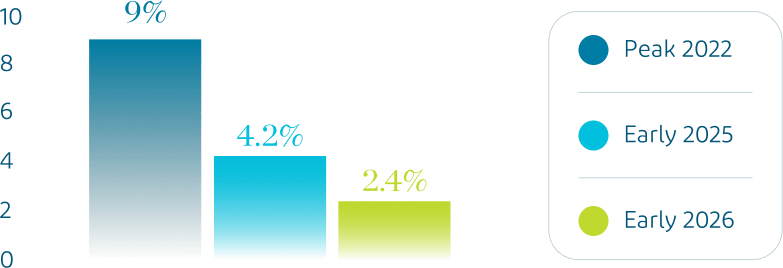
On the domestic front, inflation has continued to moderate but there has been no inflation reading since the start of the conflict with Iran. The first two months of 2026 showed inflation running at 2.4%, a meaningful improvement from the 3.0% inflation rate at the start of the Trump administration in January 2025 and well below the peak levels of 2022. This progress has been achieved despite tariff pressure and the elimination of Obamacare health insurance premium subsidies, both of which had been widely expected to reignite inflationary trends. However, the spike in gas prices due to the Middle East conflict could lead to escalating inflation in the coming months.
U.S. Inflation Trend (2022 – 2026)
Interest Rates & Inflation
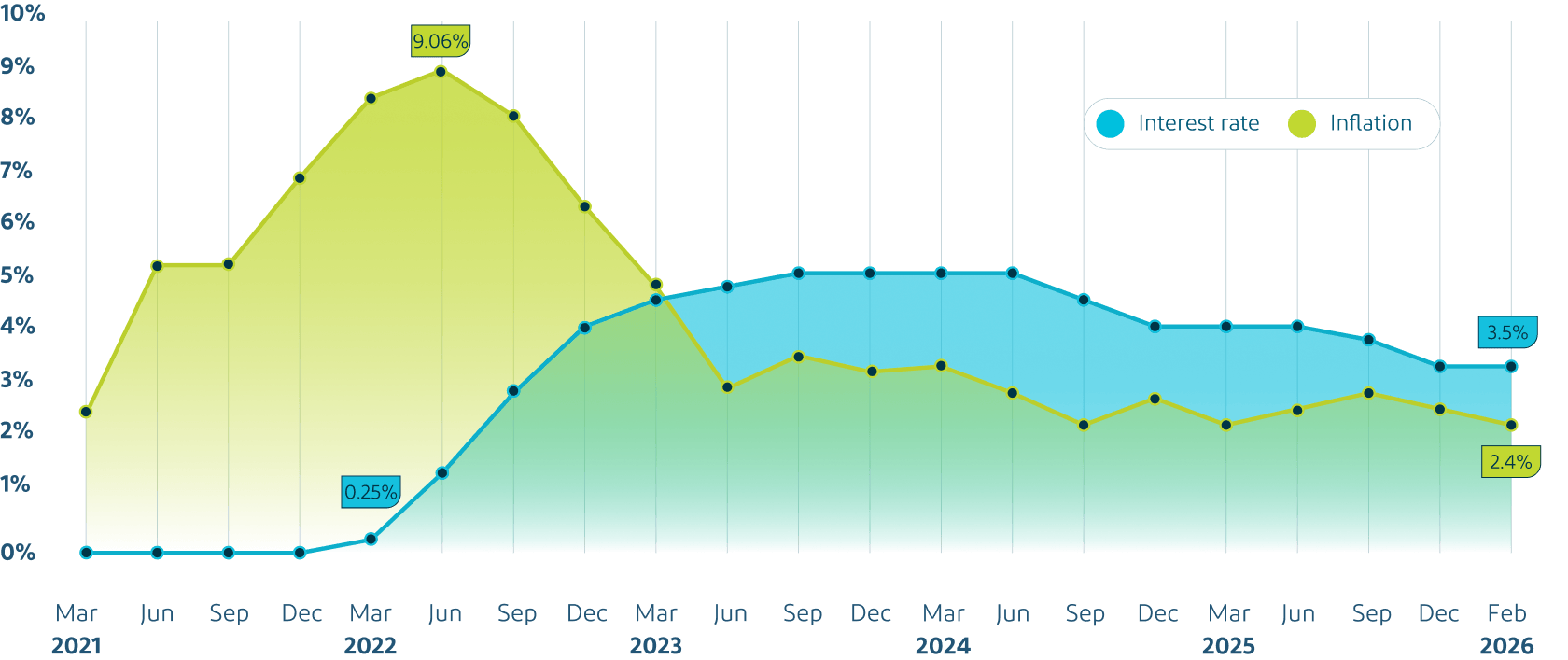
The Federal Reserve has held its benchmark rate flat at 3.5% for three consecutive months, declining to act on calls from President Trump to lower rates further. The Fed’s restraint reflects a dual mandate challenge: inflation has improved but the labor market has softened, and the risk of reigniting price pressures competes with the need to stimulate economic activity.
The Data is Clear
After the aggressive rate increases in 2022–2023, inflation has moderated, creating a holding pattern for the Fed. Rate cuts in the second half of 2024 and 2025 brought the federal funds rate from 5.25% to 3.5% but inflation remains above the targeted 2% level.
The Convergence of Rates and Inflation
Jobs Data
Conflicting Trends
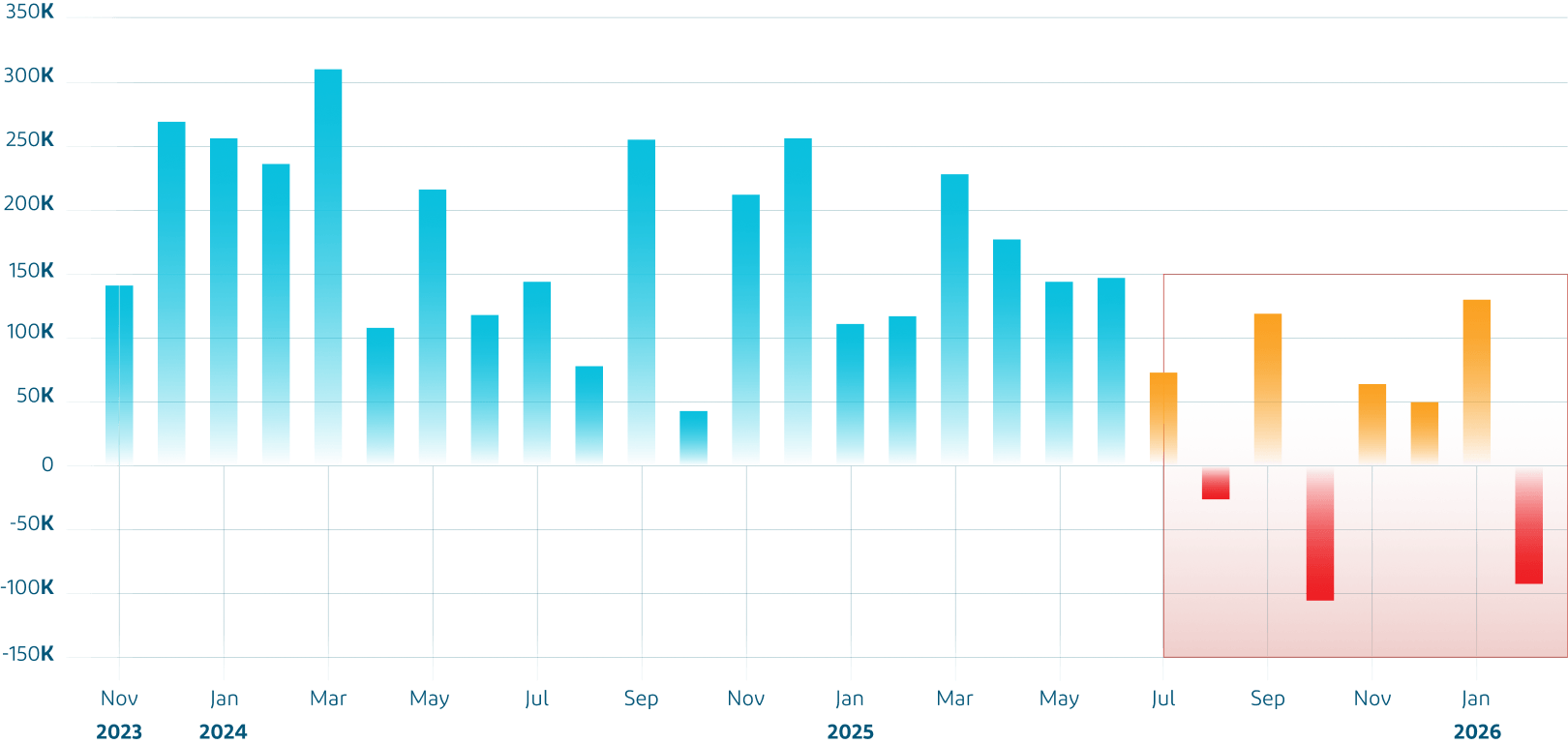
The Fed is in a tough position with rising oil prices likely driving inflation higher which would suggest keeping interest rates flat (or raising them) but the soft job market signals a need to lower rates to drive investment in the economy.
New Job Creation Nov 23 to Feb 26
Veterinary Market Headwinds
Continue
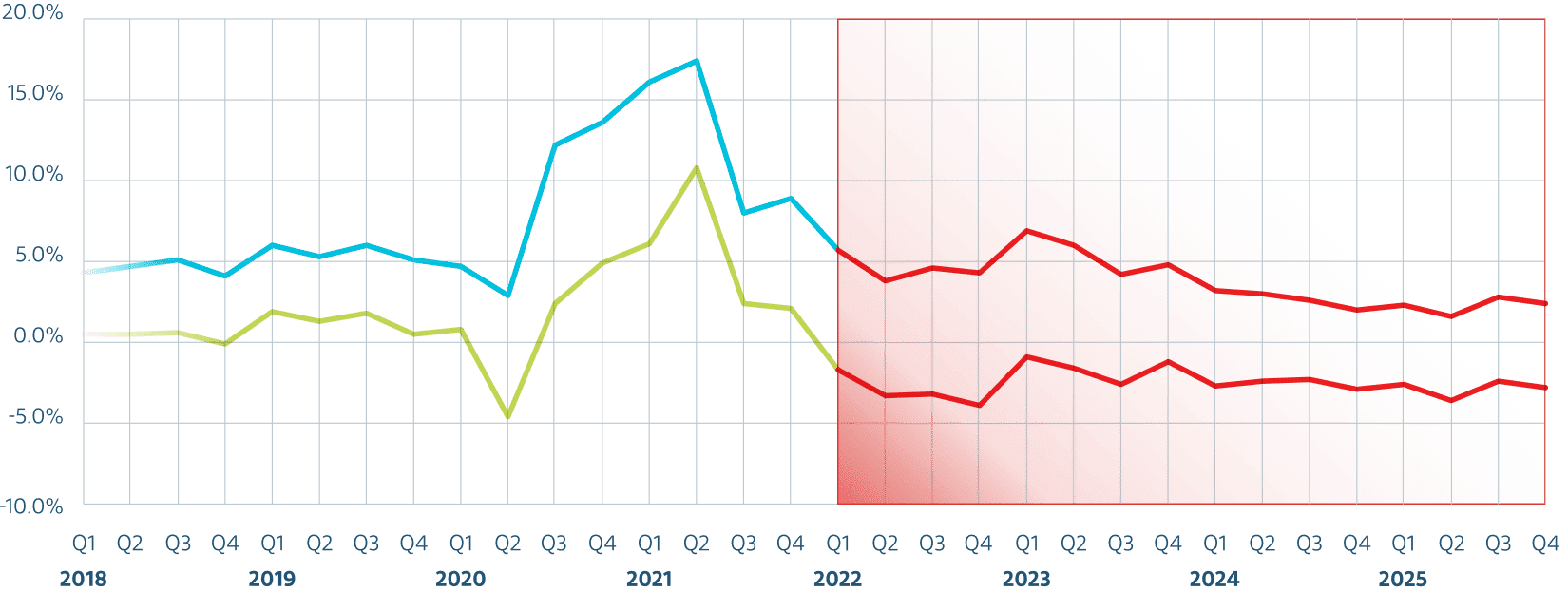
Invoice volume has now declined for four consecutive years, at a rate of at least -2% to -3% annually. This is an unprecedented trend for an industry accustomed to steady, predictable growth, and one that has increasingly forced both buyers and their investors to reckon with a structural question: is this a cyclical correction, or something more permanent?
These price increases combined with higher post-COVID inflation, rising health insurance premiums and economic uncertainty have made discretionary spending, including veterinary care, harder for many pet owners. Simultaneously with these affordability challenges, COVID-era puppies and kittens have aged into adulthood, a life stage that typically involves fewer veterinary visits. These forces, compounding over four years, have produced an industry-wide visit decline that revenue growth alone cannot mask.
Likely Drivers
Risks Buyers are Watching
If invoice growth is negative for a fifth consecutive year in 2026, investors may begin viewing this as a fundamental industry issue rather than a cyclical correction. That change, if it occurs, could have implications for valuation multiples. It has not happened yet.

Investors have not walked away. They are, however, underwriting more carefully. The practices that continue to command top-of-market valuations are those that have demonstrated above-average revenue performance, stable or growing DVM staffing, and strong demographics. The practices at the lower end of the valuation range are those where invoice trends mirror or exceed the industry average decline. Other factors leading to lower valuations are practices in hard to recruit geographies, those that have seen high DVM turnover, and buildings that need updating.
Veterinary Industry Growth – COVID Impact


Seller
Spotlight


Veterinary Office
Cortlandt Manor, NY
Dr. Paul Maus
Northern Westchester Veterinary Office has been a fixture in its community since 1991. Under Dr. Paul Maus’s ownership, the practice grew steadily into a well-established, three-DVM hospital operating out of a 3,000+ square foot, owner-occupied building in a high-income demographic. By the time Dr. Maus was ready to explore a sale, he wasn’t looking to walk away. He wanted a buyer who could support continued growth — while he kept practicing medicine on his own terms, including the flexibility in his schedule he had built over decades.
That combination — strong financial outcome plus preservation of lifestyle — required the right buyer, not just any buyer.
Ackerman Group ran a competitive process that produced nine offers. The depth of interest reflected both the quality of the practice and the demographic profile of the market. Mission Pet Health ultimately prevailed, delivering a strong valuation alongside deal terms structured around what Dr. Maus actually desired: a high proportion of cash at closing and the ability to maintain his existing schedule, including significant time away from the practice.
Price was important. Structure was equally so. A narrower process would have optimized for one at the expense of the other.

Denise Brady, the hospital’s long-time practice manager, added: “Once we signed a letter of intent, the Ackerman Team provided the guidance and support we needed to bring the transaction to closure. It would have been way more challenging without their support.”

If you want more information about this transaction or to talk to the Seller mentioned here as a reference, reach out to Rich Lester at rlester@ackerman-group.com, CEO of the Ackerman Group.
Veterinary Valuations Remain
Strong
Valuations Defy Headwinds

13.3x
EBITDA
Weighted Average
(Q1 2026)
8x–15x
EBITDA
Market Range
16x+
Top-Tier
Practices
6 Deals
Q1 2026
Transactions
12.3x
Simple Average
(Q1 2026)
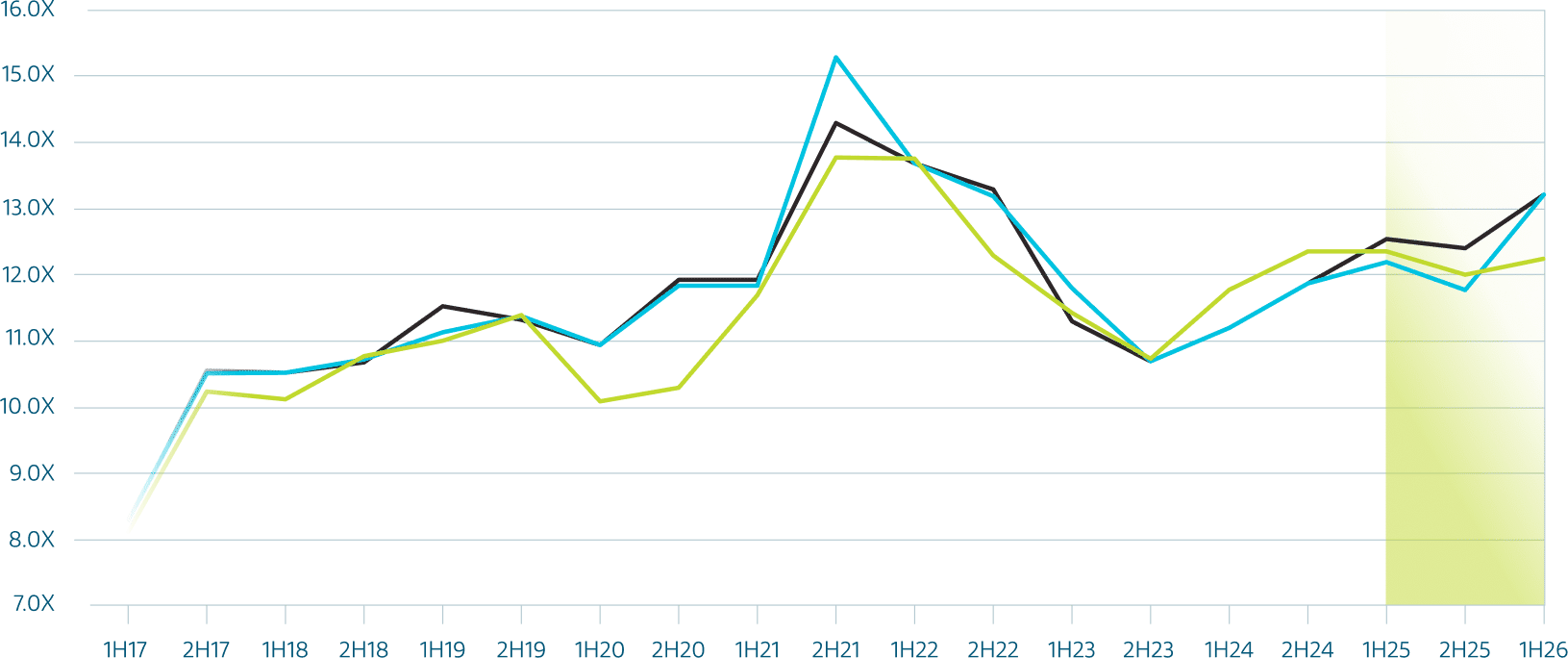
Ackerman Group’s first quarter 2026 data from transactions closed confirms that the market remains in the 8–15x EBITDA range, with a handful of exceptional practices achieving 16x or better. With 6 transactions in the first quarter, and one large one at 16x+, our weighted average multiple moved up to 13.3x EBITDA from 12.5x in 2025 with the simple average for Q1 at 12.3x EBITDA.
Average Multiple Trend: Half Yearly

Post-Close Performance Is Powering Premium Valuations
The durability of the high valuations is driven by specific dynamics: a subset of three to five high performing corporate consolidators have demonstrated a consistent ability to drive invoice, revenue and profit growth post-closing. That proven track record gives these buyers the analytical confidence to underwrite at higher multiples, because their effective multiple, once they achieve Year 1 and Year 2 post-closing growth targets, is meaningfully lower than the initial headline number. As long as more than one buyer holds this level of post-closing confidence, competitive tension at the top of the market is preserved. However, if any of these buyers’ falter, competition for deals at these high valuations could falter.
There is an additional important structural shift that deserves attention for owners of Specialty and Emergency (ER) hospitals. General practices are now selling at higher multiples than Specialty/ER, a reversal from the dynamics of the 2010s and early 2020s, when Specialty/ER commanded a premium. The reason is straightforward: the buyer universe for Specialty/ER has contracted. Several major pre-COVID Specialty/ER acquirers are no longer active, and the emerging buyer group in this segment is underwriting at lower valuations. Owners of Specialty/ER practices should factor this shift into their timing considerations.

Lower Supply of Veterinary
Practices for Sale
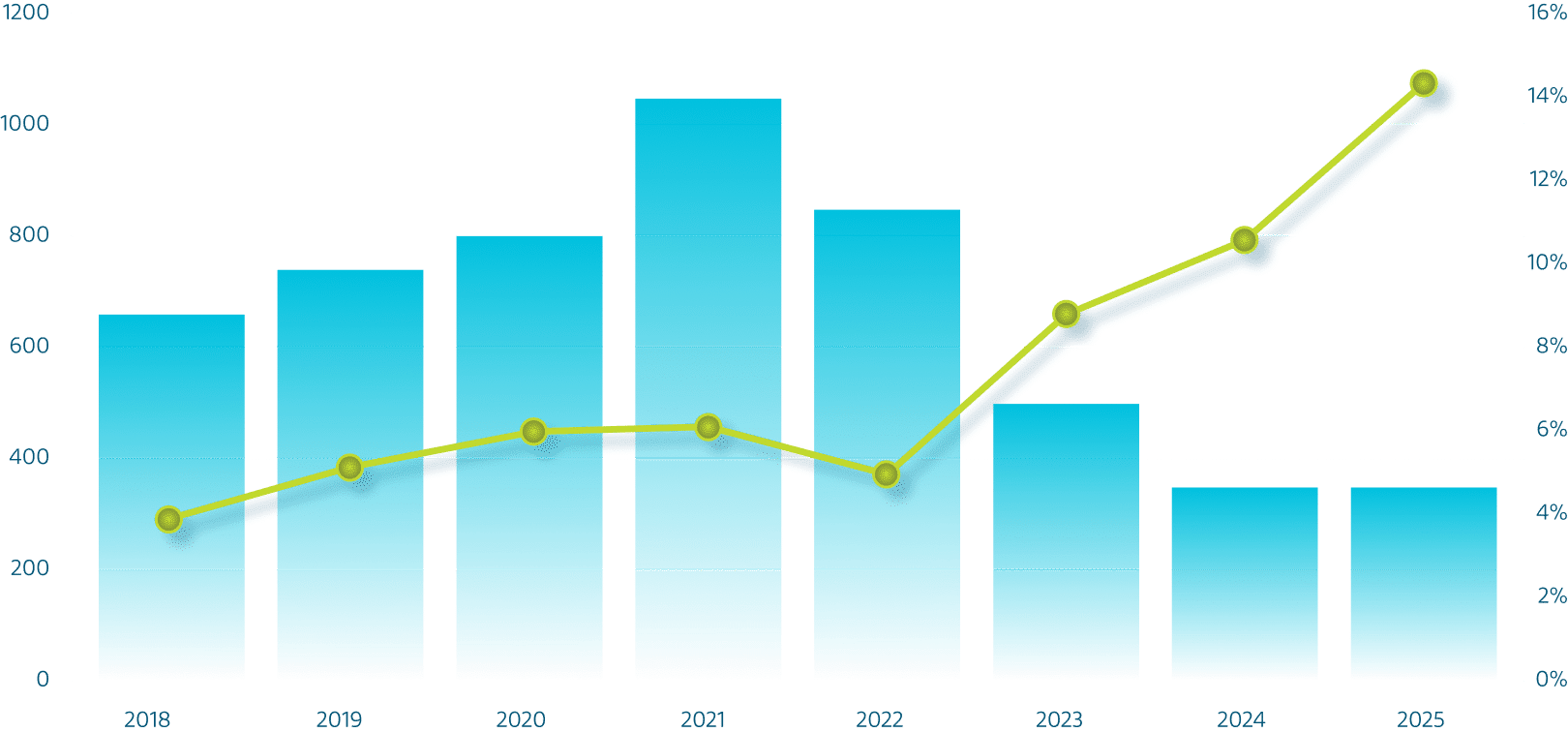
At the height of the COVID-era consolidation wave in 2021, more than 1,000 veterinary practices changed hands. That number has declined every year since, dropping to approximately 350 transactions in both 2024 and 2025. Early indications suggest 2026 is off to a slower start, with buyers reporting that the top of their acquisition funnels is quieter than in prior years.
Basic economics apply here: when demand from corporate buyers remains stable and supply contracts, prices hold. The low-supply environment has provided a meaningful floor under valuations during a period when the industry fundamentals alone would not necessarily support them.
Hospital Volume and Ackerman Market Share

Gaining Share in a Contracting Market
As overall market volume has declined, Ackerman Group has gained significant share. In 2025, we advised on 50 U.S. hospital sales, approximately 14% of all corporate transactions nationally. Our closest competitor completed, at most half this volume of transactions. That gap is not incidental. It reflects the compounding advantage of consistent market participation: broader buyer relationships, deeper transaction comparables, and greater negotiating leverage at the moment sellers need it most.
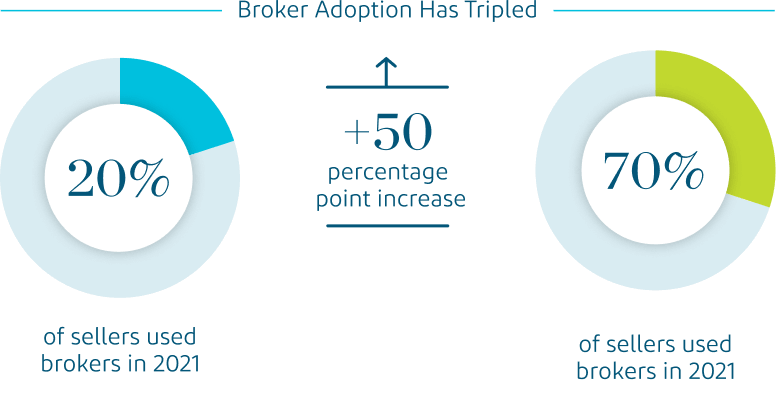
Perhaps more striking is the structural shift in how sellers are approaching the market. In 2021, we estimate that approximately 20% of sellers engaged a broker. By 2025, that figure had risen to approximately 70%. Transactions have become more complex with earnouts, joint ventures, retained equity, associate retention incentives, and sellers increasingly recognize that navigating this complexity without representation carries real financial risk. The total number of brokerassisted transactions has actually held fairly steady in the 200–250 range over this five-year period, even as overall volume has fallen, because the share of sellers using brokers has risen materially relative to the decline in total transactions.
Structural Shift Toward Broker-Led Deals

Conclusion
Share Gain in a Contracting Market
Ten years ago, in 2016, a top veterinary practice sold at 6–8x EBITDA. Today, the top of the market is 16x and the floor for corporate buyers is 8x. That context matters, valuations today remain historically exceptional by any reasonable measure.
Key Takeaways
What to Watch
Timing Matters
Questions?
Reach out to your team of advisors:


April 28, 2026
Approaching Another Valuations Peak
What Every Owner Needs to Know
with Rich Lester, Chief Executive Officer
Q1 insights on valuations, buyers, and setting the right strategy.